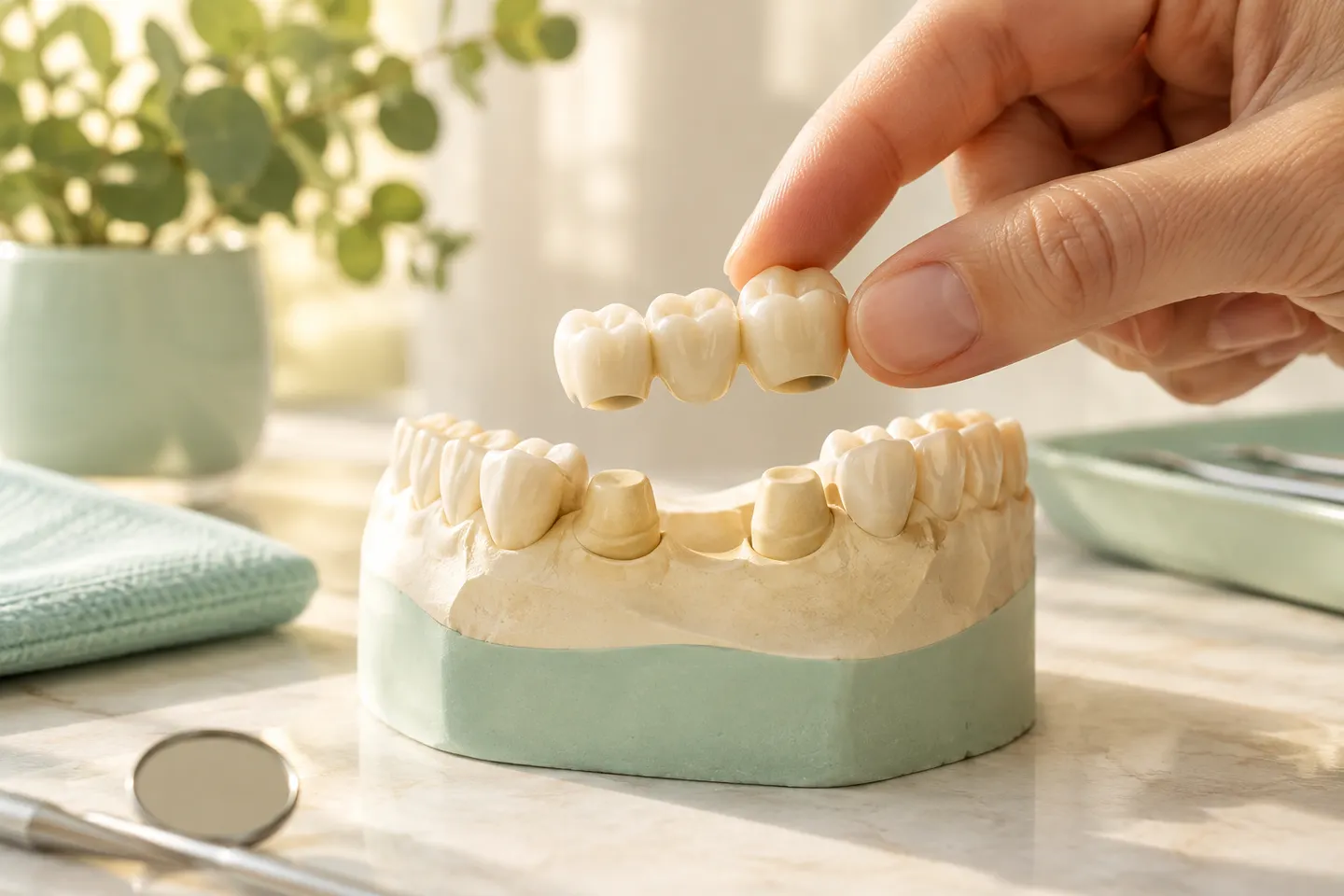
Dental Bridges explained
Dental Bridges for Missing Teeth
A gap changes more than a smile. A bridge fills the space so chewing, speaking and the alignment of nearby teeth stay on track.
Understanding the service
What dental bridges involves
A dental bridge replaces a missing tooth by anchoring an artificial tooth to the natural teeth or supports on either side. Unlike a removable appliance, a traditional bridge stays in place and is cleaned as part of your daily routine.
When a tooth is lost, neighboring teeth can slowly tilt into the gap and the opposing tooth may drift. Over time that can change the bite and make cleaning harder. Replacing the tooth helps keep everything in its place.
This explainer is part of a wider overview of children’s dentist in Lowell written for parents. When you are ready to look for a practice, Find care explains the next steps.
Step by step
From consultation to a finished bridge
Every patient is different, and each practice works differently, so a real visit may vary. This outline shows the usual flow so there are fewer surprises for you or your child.
- 01
Planning
The gap, the supporting teeth and your bite are evaluated, and bridge options are compared with other tooth replacement choices.
- 02
Preparing supports
The anchor teeth are numbed and shaped so crowns can fit over them.
- 03
Impressions and temporary
Records are taken for the lab, and a temporary bridge may protect the area in the meantime.
- 04
Placement
The final bridge is checked for fit, comfort and appearance, then cemented securely.
Types of bridges
Traditional bridges rely on crowns on both sides of the gap. Other designs use a bonded wing on the back of a neighboring tooth or support on only one side. The right design depends on location, bite forces and the health of nearby teeth.
Cleaning under a bridge
Food can collect beneath the replacement tooth, so flossing tools such as threaders or water flossers are helpful. Regular cleanings and exams keep the supporting teeth and gums healthy.
Questions families ask
How is a bridge different from a partial denture?
A bridge is fixed in place, while a partial denture can be removed for cleaning. Each has advantages depending on how many teeth are missing and where.
Does a bridge feel natural?
Most people adjust within a short time. Bite and contours are refined during fitting so chewing feels balanced.
Related parent guides
Related service explainers
Official sources for further reading
Written independently for this site. These organizations publish their own guidance; they did not review or endorse this page.
Questions about dental bridges?
Write down what you have noticed and bring it to a licensed dentist. The Find care page explains how to look for a practice for your child.