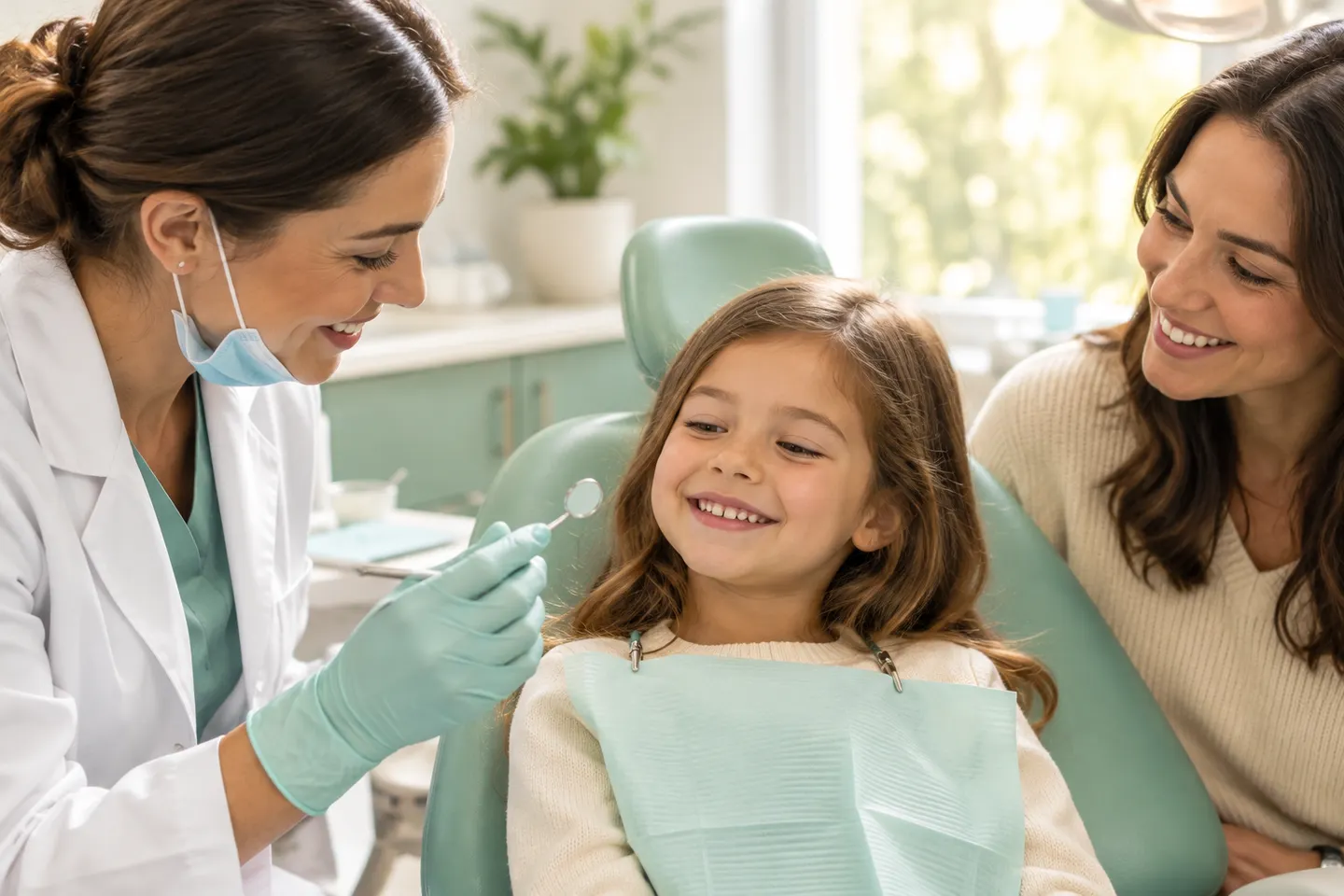
Pediatric vs. Family Dentist explained
Pediatric Dentist vs. Family Dentist: Which Is Right for Your Child?
Both can care for children well. The better fit depends on your child’s age, temperament, health needs and how your family likes to schedule care.
Understanding the service
What pediatric vs. family dentist involves
A pediatric dentist is a dentist who has completed additional specialty training, typically two to three years after dental school, focused on infants, children, teens and patients with special health care needs. That training covers child development, behavior guidance, growth of the jaws and bite, and treatment approaches for young or anxious patients. The American Academy of Pediatric Dentistry (AAPD) describes pediatric dentists as the pediatricians of dentistry.
A family or general dentist treats patients of all ages. Many family dentists see children routinely, and for a child who is relaxed in the chair and has typical dental needs, a family dentist can be a convenient choice, especially when parents and siblings can be seen at the same place.
This explainer is part of a wider overview of children’s dentist in Lowell written for parents. When you are ready to look for a practice, Find care explains the next steps.
Step by step
A simple way to decide
Every patient is different, and each practice works differently, so a real visit may vary. This outline shows the usual flow so there are fewer surprises for you or your child.
- 01
Think about your child
Consider age, temperament, medical history and any past dental experiences, good or difficult.
- 02
Think about your family
Consider whether one shared dental home would make scheduling easier for parents and siblings.
- 03
Ask practical questions
Ask how a practice approaches first visits, anxious children, parents in the room and emergencies.
- 04
Revisit as your child grows
Many children see a pediatric dentist through the early years and move to a general dentist in the teen years.
Where the two overlap
Both pediatric and family dentists provide exams, cleanings, fluoride, sealants and fillings, and both should follow prevention guidance from organizations such as the AAPD and the American Dental Association (ADA). The difference is mostly in depth of training with young children and the setting, which in pediatric practices is designed entirely around kids.
Questions to ask any dental practice
Ask whether parents can stay with young children, how the practice handles fear or behavior challenges, what happens after hours in an emergency, and which insurance plans, including MassHealth, it participates in. Confirm coverage directly with the practice; this site cannot confirm what any practice accepts.
Questions families ask
Is a pediatric dentist always better for children?
Not always. Many children do very well with a family dentist. A pediatric dentist may be especially helpful for very young children, anxious children and children with special health care needs.
Until what age do pediatric dentists see patients?
Practices set their own policies. Many see patients through the teen years and help plan a transition to a general dentist in late adolescence or early adulthood.
Can my child switch from one type of dentist to the other?
Yes. Records and X-rays can usually be transferred with your permission, which helps the new dentist understand your child’s history.
Do both types of dentists treat dental emergencies in children?
Both can, but availability varies. Ask any practice how it handles urgent problems. For serious injuries, uncontrolled bleeding, swelling that affects breathing or swallowing, or a possible jaw fracture, call 911 or go to the ER.
Related parent guides
Related service explainers
Official sources for further reading
Written independently for this site. These organizations publish their own guidance; they did not review or endorse this page.
Questions about pediatric vs. family dentist?
Write down what you have noticed and bring it to a licensed dentist. The Find care page explains how to look for a practice for your child.